History of New Boston, Texas: From Railroad Roots to Community Resilience
Learn about the fascinating history of New Boston Texas, from its early days to its development into a vibrant community.







Before the Rails: Old Boston’s Frontier Beginnings
The area that would become New Boston originally featured a settlement called Old Boston, established in the 1830s by early frontiersmen such as W. J. Boston. This first community became the original seat of Bowie County in 1840, serving as a trade post and center of local governance for early pioneers and settlers .
Old Boston housed basic amenities of the time—a courthouse, general stores, churches, and a school—and supported a population of a few hundred residents before the advent of the railroad brought profound changes.
The Railroad Arrives: Founding of New Boston in 1876
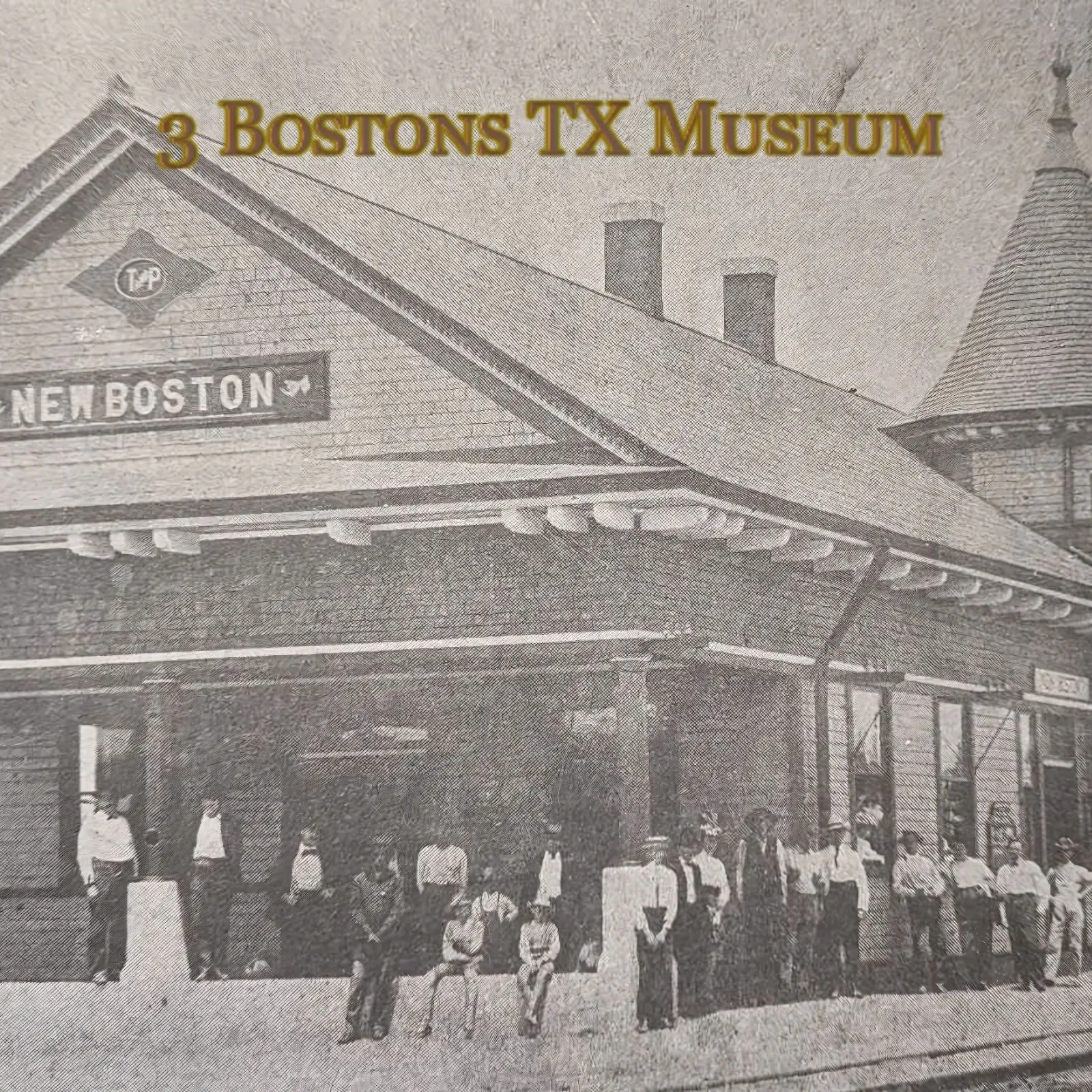
Everything changed in 1876 with the construction of the Missouri Pacific / Texas & Pacific Railroad through Bowie County. The rails bypassed Old Boston by roughly four miles, threatening its economic survival. Visionary locals, led by surveyor J. H. Smelser, negotiated with railroad officials to establish a depot and new townsite nearby .
By September 1876, land adjacent to the depot had been platted, lots sold, and the name New Boston was adopted—honoring the original hometown and its founders. The name distinguished it from Old Boston and the newer site simply called Boston .
Growing from the Tracks: 1880s–1900
Within a year of its founding, New Boston secured a post office (1877) and began to flourish. By 1884, the town had roughly 400 residents, two churches, a school, cotton gins, and its own newspaper—the New Boston Herald managed by W. W. West .
The 1890s brought further development: local industry included a furniture factory and a second newspaper, the Bowie County Populist. By 1900, the town counted 762 residents and offered a budding mix of commerce and local services .
Early 20th Century: Steady Growth and Civic Life
While growth slowed through the early 1900s, New Boston continued to stabilize and build. Civic structures rose, local businesses diversified, and civic pride remained strong. The population hovered below 1,000 until the late 1920s, when a modest boom raised numbers to around 1,300 by 1929, followed by a decline during the Depression .
Local culture centered on school events, church gatherings, and early festivals—roots that would blossom in later decades.
World War II and Explosive Growth: Army Depot and Ammunition Plant
The dawn of World War II brought dramatic transformation. Two massive military facilities—Red River Army Depot and Lone Star Army Ammunition Plant—opened just southeast of town in the early 1940s. These installations catalyzed a population boom: the city’s population nearly doubled between 1940 (1,111) and 1950 (2,688) .
The bases provided steady employment, infrastructure improvements, and residential expansion, anchoring New Boston as a regional economic hub.
Postwar Stability and Mid-Century Expansion
The decades following WWII brought further growth: by 1980, New Boston reached 4,628 residents. Industry diversified to include an International Paper mill and the Barry B. Telford state prison, complementing military employment. Schools expanded, new businesses arrived, and city life grew more structured and civic-minded .
Civic events like Pioneer Days & Rodeo began to emerge as annual traditions, drawing residents to the T&P Trailhead Park for community bonding.
The Three Bostons: How Boston, Old Boston, and New Boston Coexist
A unique part of local identity stems from the co-existence of three neighboring communities: Old Boston, Boston, and New Boston. In the late 19th century, local officials moved the county courthouse to a central spot between these towns—named Boston by the postal authority—leading to three seats of settlement within proximity .
While Boston became the official courthouse location in 1891, New Boston continued to thrive thanks to its rail-based foundation, while Old Boston gradually shrank in influence and population.
Civic Landmarks and Heritage Preservation
Today, New Boston honors its past with local institutions like the 3 Bostons TX Museum, located at Trailhead Park Plaza. The museum preserves artifacts, photos, and stories of local eras—from frontier life to mid-20th-century development. A striking mural depicting all three Bostons visually encapsulates local memory and heritage .
Preservation of local landmarks helps maintain a connection to civic identity amid modernization.
Northeast Texas Trail: Rail to Trail Renewal
The Northeast Texas Trail (NETT) is a 130-mile multi-use corridor repurposed out of former railroad right-of-way—terminating at New Boston’s T&P Trailhead Park.
When completed, NETT will stretch from Farmersville near DFW to New Boston. It includes rail bridges, wooded stretches, and trail segments for hiking, bicycling, and equestrian use—a nod to historic rail lines and a modern amenity for recreation.
Demographic Snapshot and Social Fabric
As of the 2020 Census, New Boston had 4,612 residents, with a racial composition that was 62.9% White (non-Hispanic), 21.2% Black, and about 6% Hispanic or Latino. Household and family dynamics reflect a tight-knit, multi-generational community with a median age around 38 years .
The city’s slightly declining population since 1990 reflects broader regional shifts, but its identity remains defined by local schools, civic engagement, and continuity.
Landmark Challenges: Courthouse Arson and Tornado Aftermath
Notable hardships have tested the community’s resilience:
-
In 1987, the old courthouse located in Boston (not New Boston) was destroyed by arson, possibly tied to political tension over relocation of the county seat. Investigations remain unresolved, but the event remains part of local lore .
-
On November 4, 2022, an EF3 tornado struck the western edge of New Boston, causing structural damage and reinforcing the community’s need for preparedness and mutual support during emergencies.
Local Culture: Pioneer Days Rodeo, Festivals and Museums
New Boston’s annual events are rooted in its history and civic spirit:
-
Pioneer Days & Rodeo: A signature celebration held at Trailhead Park, featuring PRCA-style rodeo events, carnival rides, live music, and a street festival.
-
Other community events include Freedom Fest / Fireworks, Yard Sale Days, Fall Family Nights, and Christmas Tree Wonderland—all bringing neighbors together in shared tradition .
These events demonstrate New Boston’s commitment to celebrating its railroad origins and community cohesion.
Education: New Boston ISD and Beyond
Educationally, New Boston is served by the New Boston Independent School District, which includes Crestview Elementary, New Boston Middle School, and New Boston High School. As of the 2022–2023 school year:
-
High School enrollment: ~321 students, 8.7 student-teacher ratio
-
Middle School: ~249 students, 9.3 ratio
-
Elementary: ~584 students, 10.9 ratio
The district promotes small class sizes, local athletic traditions, and takes pride in community-school partnerships.
Looking Ahead: Preservation Meets Progress
New Boston continues to balance growth and heritage preservation. Future efforts include:
-
Completing the Northeast Texas Trail through New Boston.
-
Supporting museum expansion and local history tours.
-
Enhancing community festivals and civic celebrations.
-
Economic development through industrial parks, military installations, and small business support.
The mayor and civic leadership emphasize inclusive development paired with preserving small-town identity.
Conclusion
The history of New Boston, Texas, is a story shaped by ambition, adaptability, and community spirit. From its founding alongside railroad tracks in the 1870s, through wartime expansions and civic challenges, to today’s trailhead festivals and heritage celebrations, the city has maintained a strong sense of identity.
New Boston’s story isn’t just about growth—it’s about how residents came together to build, rebuild, and preserve their community.