The story of Corpus Christi, Texas is one of exploration, resilience, coastal trade, military strength, and cultural pride. Known today as the “Sparkling City by the Sea,” Corpus Christi has grown from a windswept coastal outpost into one of the most important port cities in Texas. Its past is layered with Spanish exploration, Mexican heritage, Civil War conflict, cattle ranching expansion, oil booms, hurricanes, and modern economic transformation.
If you want to truly understand Corpus Christi today, you have to step back in time. This guide walks you through the complete history of Corpus Christi, from its earliest inhabitants to its present-day role as a thriving Gulf Coast city.
Long before European explorers arrived, the Corpus Christi region was home to indigenous tribes who relied on the bay and surrounding land for survival. The Karankawa people were the primary Native American tribe living along the Texas Gulf Coast.
The Karankawa were known as skilled fishermen and hunters. They navigated the shallow waters of Corpus Christi Bay in dugout canoes, fished with spears and nets, and gathered shellfish along the coast. Their way of life revolved around seasonal migration, coastal resources, and survival in a challenging environment.
While much of their history was passed down orally, archaeological findings show they thrived here for centuries before European contact.
In 1519, Spanish explorer Alonso Álvarez de Pineda mapped parts of the Texas coastline. Later, in 1539, Spanish explorer Alonso Álvarez de Pineda’s expedition anchored in the bay on the Catholic feast day of Corpus Christi, meaning “Body of Christ.”
That is how the bay — and eventually the city — received its name.
Throughout the 1700s, Spain claimed Texas as part of New Spain. Spanish missionaries and explorers traveled the region, though permanent settlements near present-day Corpus Christi remained limited due to difficult coastal conditions.
The name Corpus Christi reflects the strong Spanish Catholic influence that shaped early Texas history.
After Mexico gained independence from Spain in 1821, Texas became part of Mexico. During this period, empresarios were granted land to attract settlers.
One of the most influential figures in early Corpus Christi history was Henry Lawrence Kinney, who established a trading post in 1839 near present-day downtown Corpus Christi. His settlement became known as Kinney’s Ranch.
Kinney’s Ranch became a hub for trade between Mexico and the Republic of Texas. It was strategically located along the coast, making it ideal for shipping and commerce.
By the 1840s, Corpus Christi began evolving from a trading outpost into a recognizable coastal settlement.
Corpus Christi played a pivotal role in the Mexican-American War (1846–1848).
In 1845, General Zachary Taylor stationed U.S. troops in Corpus Christi before marching south toward the Rio Grande. The city became a staging ground for American forces.
The presence of thousands of troops dramatically increased the city’s population and importance. The war ultimately resulted in Texas’ border being established at the Rio Grande.
This period cemented Corpus Christi’s reputation as a strategic military location — a role it continues to play today.
Following the war, Corpus Christi became an important shipping point for the booming Texas cattle industry. Ranchers drove cattle from South Texas to the coast, where ships transported goods to other markets.
The arrival of the railroad in the late 1800s further accelerated growth. With rail connections, the city became a key transportation hub linking inland Texas to Gulf trade routes.
By the late 19th century, Corpus Christi was firmly established as:
A cattle shipping center
A fishing port
A developing coastal trade city
This era laid the foundation for the city’s economic future.
One of the most transformative moments in Corpus Christi’s history came with the development of a deep-water port.
Before the 1920s, shallow waters limited shipping access. But in 1926, the completion of the Corpus Christi Ship Channel allowed larger vessels to enter the harbor.
This development turned Corpus Christi into a major international shipping hub. Trade expanded dramatically, and the city’s economic importance surged.
Today, the Port of Corpus Christi is one of the largest ports in the United States by tonnage — a legacy that began with early 20th-century engineering.
The discovery of oil in Texas reshaped the state’s economy — and Corpus Christi benefited significantly.
Throughout the 1930s and 1940s, oil refineries and petrochemical plants were constructed near the port. This industrial growth brought:
Jobs
Population growth
Infrastructure development
Expanded housing and neighborhoods
The city transformed from a modest coastal town into an industrial powerhouse.
Energy remains one of the strongest drivers of Corpus Christi’s economy today.
During World War II, Corpus Christi once again became vital to U.S. military operations.
In 1941, the U.S. Navy established Naval Air Station Corpus Christi. The base became a primary training site for naval aviators.
Thousands of pilots trained here during the war. The presence of the base boosted the local economy and permanently tied the city to military aviation.
Today, Naval Air Station Corpus Christi remains one of the most important military installations in South Texas.
Living on the Gulf Coast comes with challenges — especially hurricanes.
Corpus Christi has endured several major storms throughout its history, including:
The 1919 Hurricane, which caused devastating damage
Hurricane Celia in 1970
Hurricane Harvey in 2017
Each time, the community rebuilt stronger. Hurricane protection systems, improved infrastructure, and modern construction standards now help protect the city.
The resilience of Corpus Christi residents has become a defining part of its identity.
Corpus Christi has deep Mexican-American roots, and its cultural identity reflects this heritage.
The city played a role in Texas civil rights history. In 1970, the controversial “Chicano riots” highlighted tensions surrounding educational equality and political representation.
Over time, Corpus Christi has grown into a diverse and culturally rich community where Hispanic traditions, Gulf Coast culture, and Texas pride blend seamlessly.
The city is also famously linked to Selena Quintanilla, the Queen of Tejano Music. Selena grew up in Corpus Christi, and her legacy is honored through museums and tributes across the city.
By the late 20th century, tourism became a major pillar of the local economy.
Major attractions developed, including:
Texas State Aquarium
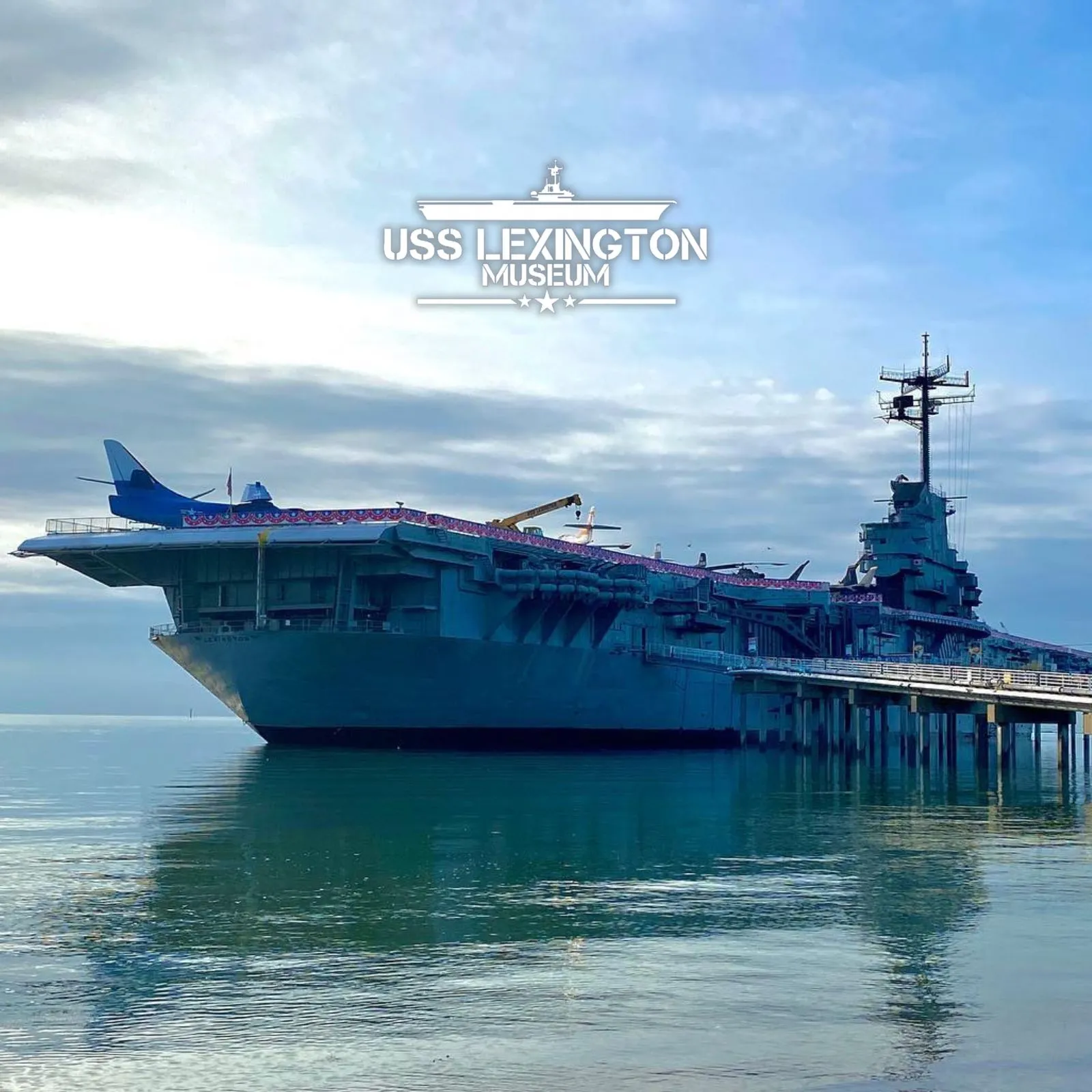
USS Lexington Museum
Beach resorts along North Padre Island
Downtown waterfront redevelopment
The city embraced its identity as a coastal destination for families, anglers, birdwatchers, and beachgoers.
The nickname “Sparkling City by the Sea” reflects the sunny climate, waterfront beauty, and tourism-driven growth.
Today, Corpus Christi stands as:
One of the largest ports in the U.S.
A major energy export center
A regional healthcare hub
A growing tourism destination
A center for military aviation
Liquefied natural gas (LNG) terminals and global energy exports have strengthened its economic role internationally.
At the same time, the city continues investing in downtown revitalization, waterfront improvements, and community development.
Corpus Christi balances industrial strength with coastal lifestyle appeal.
Education has also shaped modern Corpus Christi. The city is home to:
Texas A&M University–Corpus Christi
Del Mar College
Multiple independent school districts
These institutions support workforce training, marine research, and regional economic growth.
Investment in education ensures the city’s continued development for future generations.
Corpus Christi’s history reveals a city that:
Survived harsh coastal conditions
Played a role in war and national defense
Benefited from oil and shipping expansion
Rebuilt after devastating hurricanes
Embraced cultural diversity
Continues evolving in the modern era
It is a city shaped by water — by its bay, its port, and its connection to the Gulf of Mexico.
The history of Corpus Christi, Texas is a story of transformation. From Native American settlements and Spanish exploration to military significance, port expansion, oil industry growth, and modern tourism, the city has continually reinvented itself while honoring its roots.
Today, Corpus Christi stands as a resilient Gulf Coast city with deep cultural heritage, economic importance, and a strong sense of community. Its past is written in its shoreline, its port, its neighborhoods, and its people.
Understanding Corpus Christi’s history helps explain why it remains one of Texas’ most distinctive and dynamic coastal cities — a place where tradition and progress meet by the sea.